English
 Arabic
 French
 Spanish
 Portuguese
 Deutsch
 Turkish
 Dutch
Dutch
 Italiano
 Russian
 Romaian
 Portuguese (Brazil)
 Greek
Greek

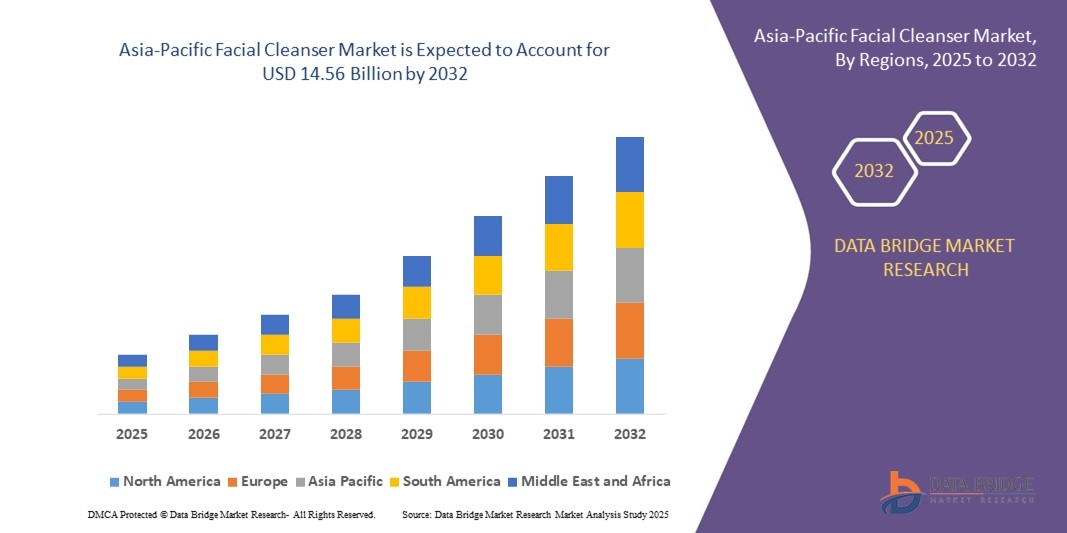
Asia-Pacific Facial Cleanser Market Insights: Share, Size, Growth Trends & Forecast
Other |
2025-11-27 19:26:58
The scientific community continues to evolve rapidly as new technologies, research methodologies, and global standards emerge. At the center of this progress lies the essential role of chemical reagents—fundamental materials that determine the quality and consistency of laboratory results. These reagents support applications across clinical testing, pharmaceutical research, food analysis, environmental monitoring, and industrial quality control. As modern laboratories refine their processes, the demand for reliable and high-purity reagents has grown significantly, aligning with broader trends in global research development.
Within this evolving landscape, the Laboratory Chemical Reagent Market plays an increasingly important role. Laboratories require formulations that meet strict purity, stability, and performance standards. Broader chemical sectors—reflected in market observations such as Calcium Citrate insights—highlight how interconnected scientific research and chemical manufacturing have become. As global testing requirements expand, suppliers must adapt to changing laboratory expectations.
Advanced research fields are leading contributors to rising reagent demand. Innovations in genomics, immunology, biotechnology, and personalized medicine have created new testing requirements that rely on specialized chemical inputs. These fields demand reagents capable of supporting highly sensitive reactions, enabling researchers to analyze biological systems at deeper and more precise levels than ever before. Even slight variations in reagent quality can influence outcomes, making consistency a top priority for laboratories worldwide.
Automation trends are also shaping reagent development and consumption. Modern laboratories increasingly utilize robotic systems for sample preparation, chemical dispensing, and analytical measurements. Reagents must be engineered for machine compatibility, including optimized viscosity, extended shelf-life, and packaging formats suitable for automated workflows. Suppliers are adapting production and packaging techniques to ensure smooth performance in high-throughput environments.
Environmental and industrial testing contribute to continuous reagent usage. Laboratories tasked with detecting contaminants, validating chemical compositions, and ensuring regulatory compliance rely on reagents that deliver predictable behavior across demanding conditions. The expansion of industries such as manufacturing, food processing, and environmental protection has increased the need for reliable testing materials. These laboratory activities ensure that products, natural resources, and industrial outputs meet global safety and quality benchmarks.
Digital transformation within laboratories further emphasizes the importance of traceability and documentation. Digital inventory systems, electronic lab records, and compliance management tools require reagents with detailed supporting data. Suppliers are integrating QR codes, enhanced labeling systems, and searchable documentation to support laboratory workflow efficiency.
Sustainability is another key force influencing reagent production. Laboratories and manufacturers are exploring greener synthesis processes, reduced-waste packaging, and environmentally responsible material handling. This aligns with a broader global push toward sustainable scientific practices without compromising accuracy or performance.
Looking ahead, the future of laboratory research will rely on reagents that adapt to growing technological complexity and expanding scientific inquiry. Emerging fields, advanced diagnostic systems, and evolving regulations will require even more specialized reagent formulations. As laboratories continue pushing toward greater precision, efficiency, and innovation, chemical reagents will remain indispensable to scientific progress across all major research and industrial sectors.